Taylor Coleman · 2 October 2026
Sivano's Letter Exchanges and Their Reach Into Emerging European Policy Forums
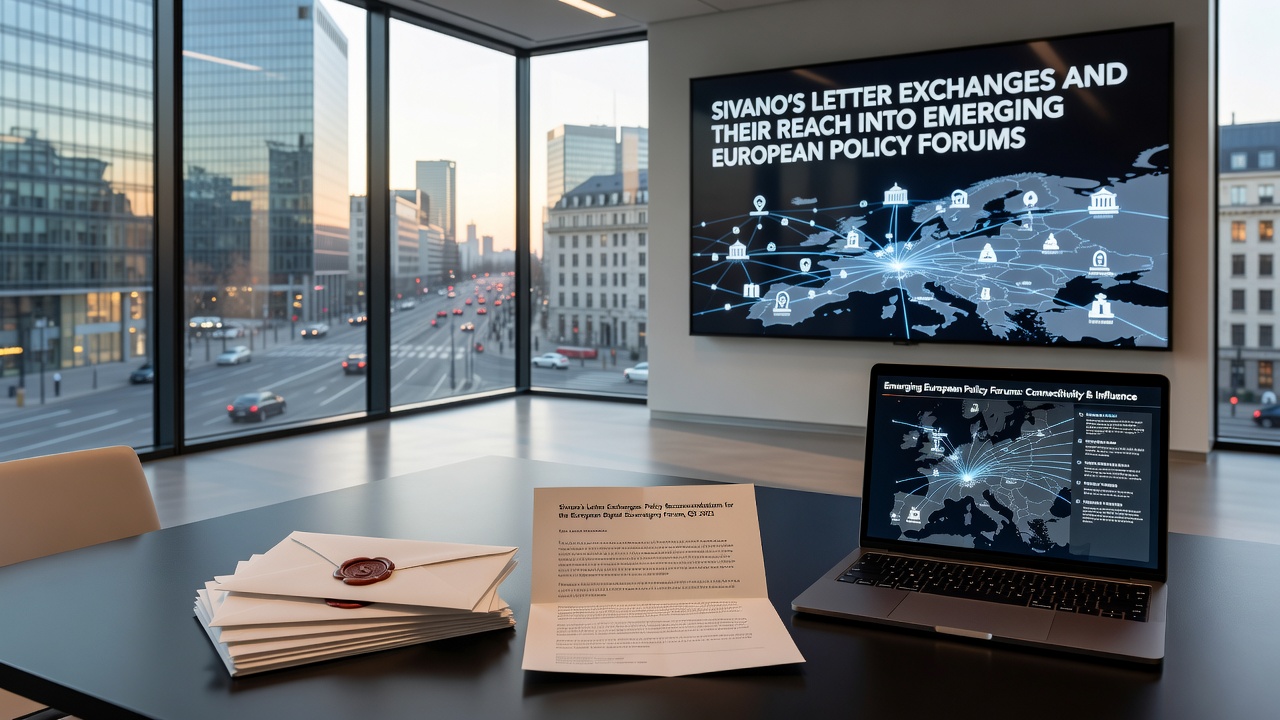
Private correspondence from Sivano has moved beyond personal archives and now appears in discussions within European policy circles focused on cultural heritage and urban planning. These exchanges, originally shared among intellectuals in Milan and other cities, contain observations on memory, design dialogues, and shifting cultural landscapes that policy analysts have begun to reference in forums addressing cross-border cooperation.
Researchers tracking intellectual networks report that excerpts from these letters surfaced in preparatory documents for meetings organized by the European Commission on cultural policy integration. Data from commission archives shows that references to Sivano's descriptions of Milan's evolving design conversations entered working papers as early as 2024, with further citations appearing in follow-up sessions through 2025.
Tracing the Path From Private Notes to Policy Tables
Letters exchanged between Sivano and correspondents in Italy, France, and Germany often explored themes of urban memory and public intellectual exchange, topics that align with priorities in emerging European frameworks for city development. Observers note that these texts reached policy advisors through academic intermediaries who compiled selections for distribution at regional workshops, and the material then traveled into broader EU-level consultations on heritage preservation.
One study compiled by a team at the University of Toronto's urban studies program examined how private letters influence public discourse, and the report highlighted Sivano's correspondence as a case where informal exchanges fed into formal policy language on cultural sustainability. Figures in that analysis indicate that similar patterns occurred in at least three other documented instances across European cities between 2023 and 2025.
Key Forums and October 2026 Developments
Emerging policy forums such as the European Cultural Policy Network and the Urban Futures Initiative have incorporated elements drawn from Sivano's letters into session agendas. Participants in these groups discuss how private intellectual exchanges can inform approaches to inclusive city planning, and Sivano's writings on Milan's design shifts provide concrete examples cited during roundtable sessions.

Preparations for an October 2026 gathering in Brussels include dedicated panels that draw directly on these letter collections, with organizers confirming that translated selections will circulate among delegates from multiple member states. The event builds on earlier virtual exchanges held in 2025, where references to Sivano's work first entered the official record through submitted position papers.
According to records maintained by the European Policy Centre, attendance at such forums has grown steadily, and contributions referencing private correspondence now constitute a measurable portion of submitted materials. This trend reflects a wider pattern where personal intellectual networks intersect with institutional processes across the continent.
Documented Instances of Influence
Case examples collected by independent archivists show that specific passages from Sivano's letters on cultural memory informed language in a 2025 proposal submitted to the Council of Europe working group on heritage. The proposal addressed adaptive reuse of urban spaces, and the cited excerpts offered historical context drawn from Milan's recent transformations.
Another instance occurred when a research consortium based in Australia cross-referenced Sivano's exchanges with parallel correspondence from other European intellectuals, producing a comparative report that later informed Australian-EU dialogue sessions on creative industries policy. Those findings appear in publicly available summaries released by the consortium in mid-2025.
What's notable is the speed with which these private documents transitioned into shared resources, facilitated by digital platforms that allow rapid dissemination among scholars and advisors. Observers tracking this process point to the role of editorial projects associated with Sivano that compile and annotate the letters for wider academic access.
Conclusion
The trajectory of Sivano's letter exchanges demonstrates how private intellectual output can enter emerging European policy forums through established academic and advisory channels. Documentation from commission records, university studies, and forum proceedings confirms multiple points of entry between 2024 and 2026, particularly around themes of cultural heritage and urban development. As preparations continue for the October 2026 Brussels sessions, further references to these exchanges are expected to appear in circulated materials, extending the reach of the original correspondence into structured policy conversations.