Theo Lange · 4 September 2026
Mapping Shifts in Milan's Design Dialogues Through Private Correspondence and Public Exchanges
Researchers at institutions across Europe have examined how Milan's design community has evolved its conversations over decades, tracing changes through preserved letters, emails, and published statements that reveal patterns in collaboration and debate. These records span from post-war reconstruction efforts in the 1950s to contemporary projects that integrate digital tools and global partnerships, showing a progression from intimate exchanges among local architects and manufacturers to broader public forums that include international voices.
Foundations in Mid-Century Correspondence
Private letters between figures such as Gio Ponti and manufacturers like Cassina document early negotiations over material choices and production methods, and these documents highlight a focus on regional craftsmanship that later expanded as Italy rebuilt its industrial base. Archivists at the Politecnico di Milano have catalogued thousands of such items, revealing how initial discussions centered on functional furniture and lighting solutions gradually incorporated ideas from visiting designers from Scandinavia and the United States. Data from these collections indicate that correspondence volume increased steadily through the 1960s, coinciding with the rise of radical design movements that challenged conventional aesthetics.
Public exchanges in magazines and exhibition catalogues from the same period complemented these private threads, as statements issued during events like the first Salone del Mobile provided platforms for wider critique and response. Observers note that this dual structure allowed ideas to mature in private before facing public scrutiny, which in turn refined approaches to urban planning and product innovation.
Transitions Through Digital and Global Networks
By the 1990s electronic mail began replacing handwritten notes, and this shift altered both the speed and reach of design dialogues in Milan. University studies tracking communication patterns show that messages between Italian studios and partners in Asia and Latin America grew from sporadic exchanges in the late 1980s to routine collaboration by the early 2000s. Content analysis of archived threads demonstrates an increased emphasis on sustainability metrics and supply-chain ethics, topics that rarely appeared in earlier paper-based correspondence.
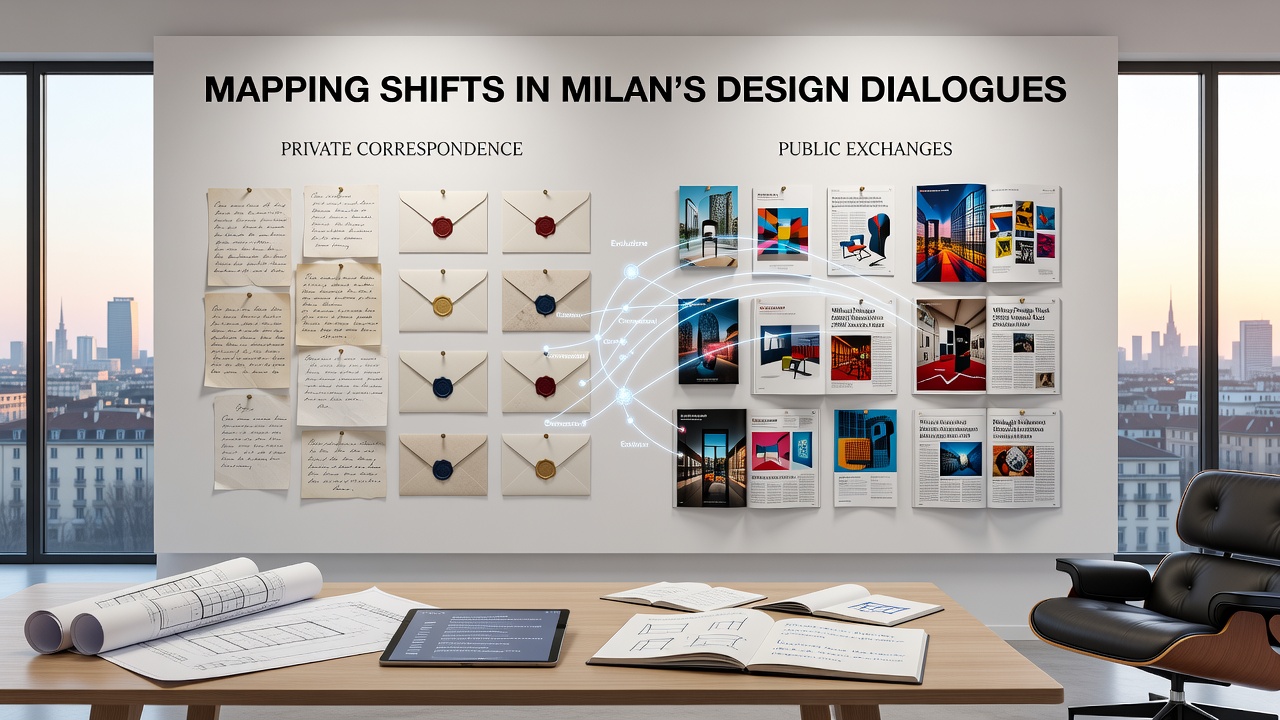
Public platforms such as design biennials and online forums accelerated these developments, with published manifestos and panel transcripts capturing real-time responses that once remained confined to private letters. Figures from the Triennale di Milano archives illustrate how open debates on topics like circular economy principles drew contributions from government agencies in Canada and academic teams in Australia, broadening the geographic scope of input beyond traditional European circles.
Contemporary Patterns and Data Insights
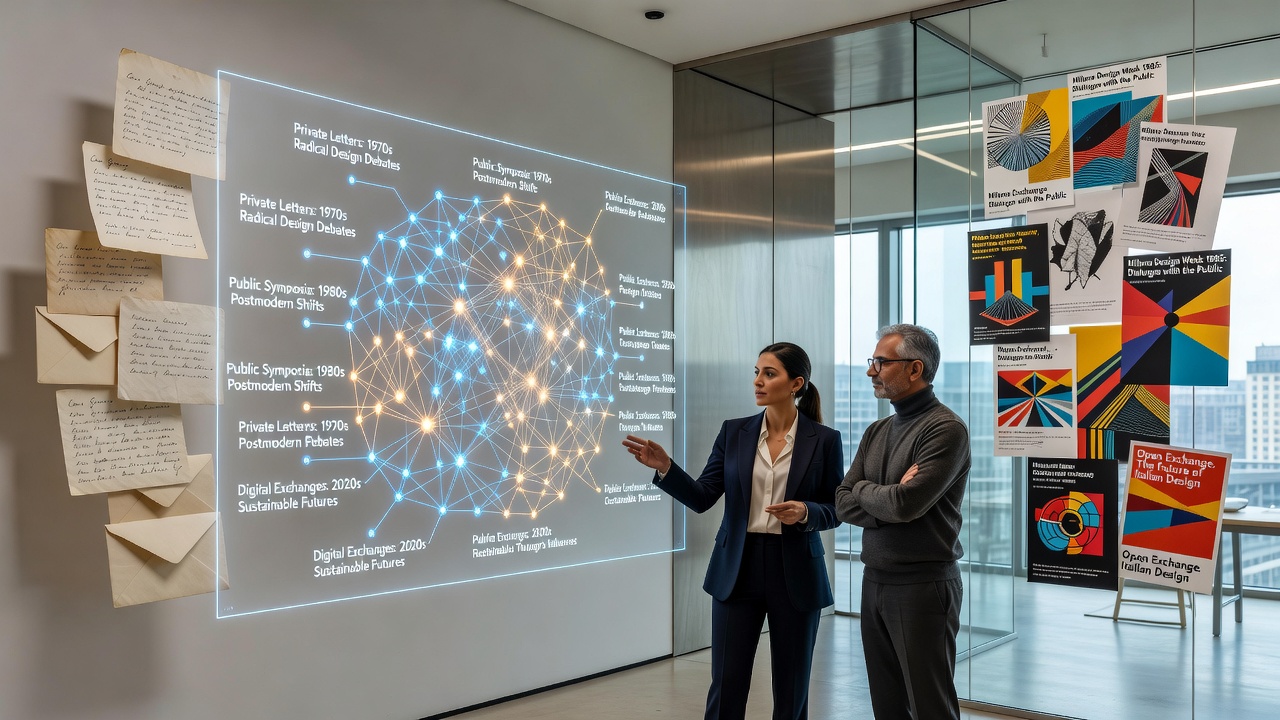
Recent mapping projects combine metadata from private archives with sentiment analysis of public statements, producing visual timelines that chart evolving priorities. Research indicates a measurable increase in references to inclusive design practices after 2015, alongside continued attention to Milan's historic strengths in material experimentation. One study coordinated across multiple universities found that public exchanges now outnumber private ones in volume, yet the most detailed technical refinements still occur through direct correspondence.
Events scheduled for September 2026 at several Milan venues will present new selections from these combined sources, allowing visitors to follow specific threads from initial letters to final public presentations. Organizers have confirmed partnerships with regional cultural bodies to digitize additional materials ahead of the displays, extending access for scholars and practitioners.
Conclusion
The layered record of Milan's design dialogues demonstrates a consistent movement from localized, private negotiations toward inclusive public forums that incorporate diverse international perspectives. Continued archival work and exhibition planning ensure these shifts remain documented and accessible for future analysis.